

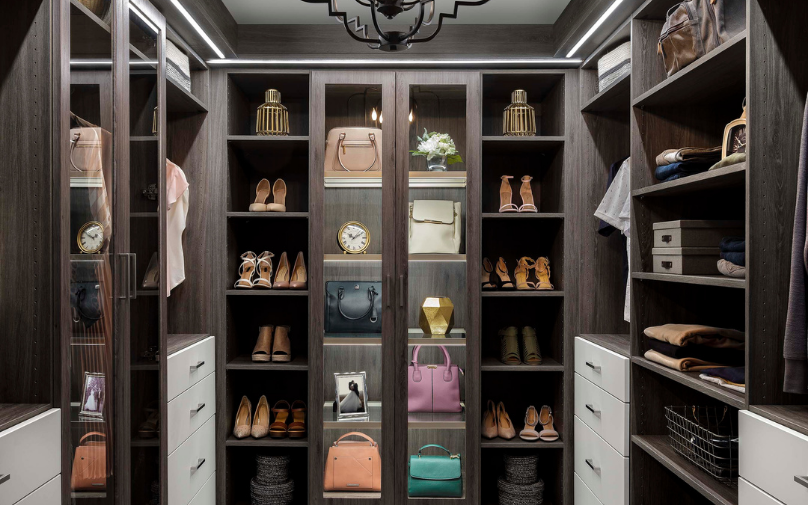
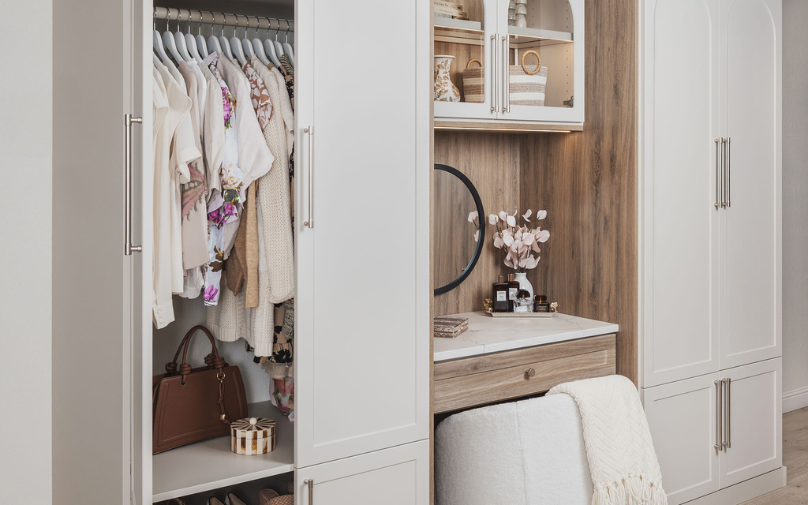
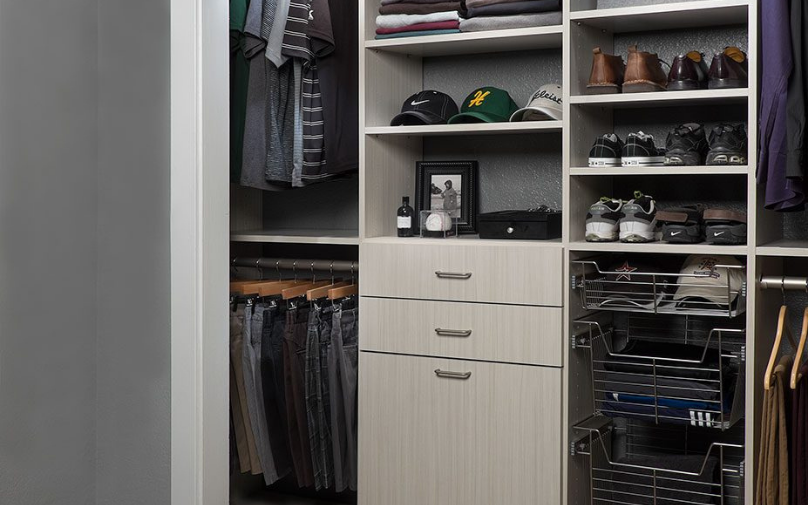



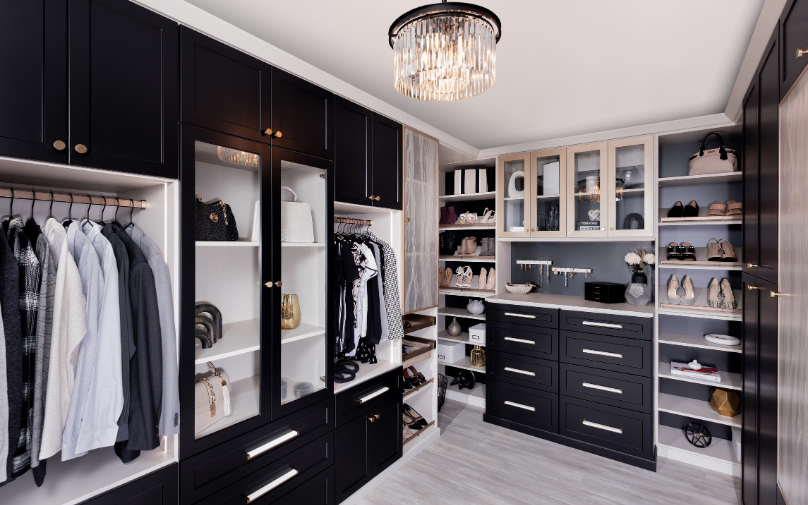
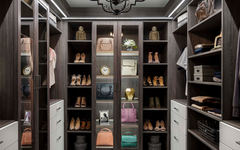
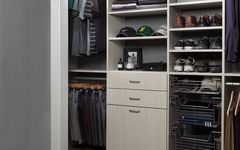
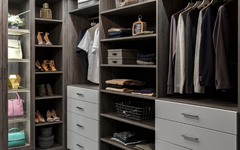
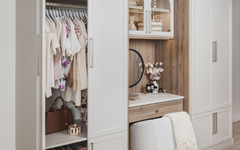
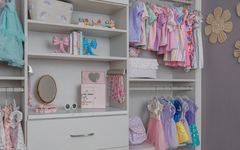
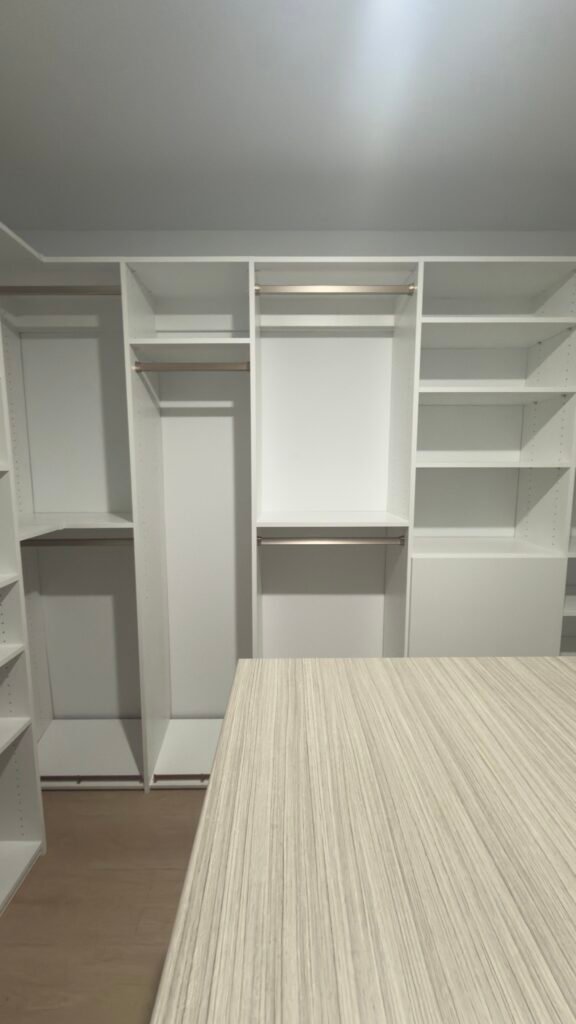
Empty the closet, keep only what you wear, then give every category a fixed zone: long hang, double hang, shelves, drawers and shoes. Hang by type, then by color. If things keep piling up, the layout is the problem, not you.
Most closets don’t get messy because their owners are disorganized. They get messy because the closet was never designed to hold what’s in it. A typical Orlando builder closet comes with one wire shelf, one rod and a lot of wasted wall. You can fold perfectly and buy matching hangers, and it will still slide back into chaos within a month.
This guide walks through the order we use when we plan closets for homes across Central Florida: clear it out, decide what stays, sort it, then give each category a home that fits it. It works for a reach-in, a walk-in or a small bedroom closet.
Step 1: Empty the closet completely
Take everything out, including the floor and the top shelf. It feels like more work than tidying in place, but it’s the only way to see what you own and how much space you really have. Wipe the shelves and check the corners. In Florida’s humidity, a closet that’s been packed tight for months can hide musty spots or mildew on back walls, and you want to catch that now.
Step 2: Decide what stays
Sort everything into four piles: keep, donate, sell and toss. Ask three questions about each piece: have I worn it in the last year, does it fit, and would I buy it again today? Our closet decluttering guide covers methods that make this faster, including the 80/20 rule and the KonMari approach.
Move off-season and rarely used items out of prime space. In Central Florida that’s a short list (a few coats and heavy sweaters for the handful of cold mornings), so they can go on a high shelf or in labeled bins.
Step 3: Group what’s left by category
Before anything goes back, group like with like: shirts, pants, dresses, jackets, workout clothes, shoes, bags and accessories. Count roughly how much of each you have. That count tells you how many feet of rod, how many shelves and how many drawers you need, which is exactly how a closet designer sizes a layout.
Step 4: Know what to hang and what to fold
Hang the things that wrinkle or lose their shape when folded: dress shirts, blouses, dresses, blazers, suits, coats and dress pants. Fold the things that stretch on a hanger or stack well: knits, sweaters, T-shirts, jeans, workout clothes and denim.
| Hang | Fold |
|---|---|
| Dress shirts and blouses | T-shirts and casual tops |
| Dresses and skirts | Sweaters and knit cardigans |
| Blazers, suits and coats | Jeans and casual pants |
| Dress pants (folded over a hanger bar) | Workout clothes and pajamas |
| Linen and silk pieces | Underwear, socks and swimwear |
Heavy knits are the classic mistake: hung sweaters get shoulder bumps and stretch out. If you’re unsure about a specific piece, we wrote a short guide on whether cardigans should be hung or folded.
Step 5: Give every category a zone
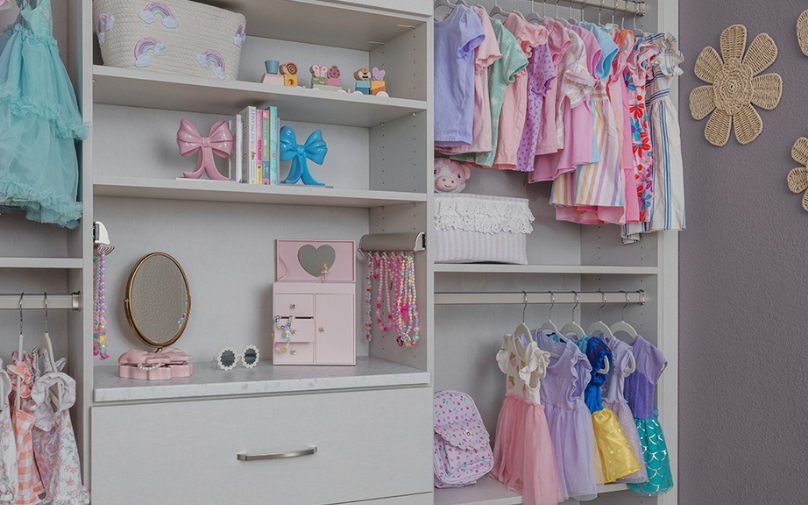
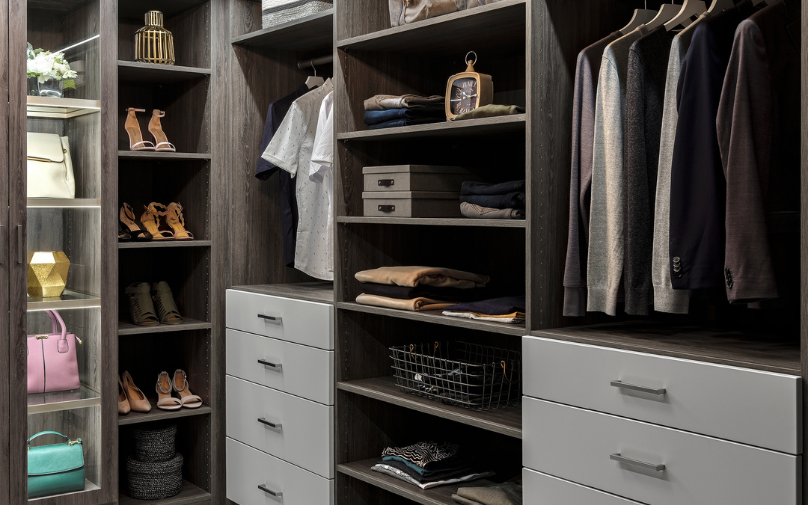
This is where most closets fail. Every category needs a fixed place sized for it:
- Double hang (two rods stacked) for shirts, blouses and folded pants. It doubles hanging capacity in the same wall width.
- Long hang for dresses, coats and robes. Most people need far less of it than they think, often 2 to 3 feet.
- Shelves for folded sweaters and jeans, ideally adjustable and no deeper than 14 inches so stacks don’t topple.
- Drawers for underwear, socks, workout clothes and anything small. Read more about when drawers are worth it in a closet.
- Shoe shelves, slanted or flat, where you can see every pair.
- High shelves for luggage and the few off-season items.
Put what you use every day between hip and shoulder height. Everything else goes higher or lower.
Measure your rod before you buy hangers or organizers. A typical person needs about 1 inch of rod per shirt on slim hangers, so 6 feet of double hang holds roughly 140 shirts and pants. If your count is bigger than your rod, no folding trick will fix it.
Step 6: Hang in a logical order
Within each zone, sort by type first (all shirts together, all pants together), then by sleeve length, then by color from light to dark. Sorting by type first is faster when you get dressed because you’re usually looking for “a shirt”, not “something blue”. Color within each type keeps it visually calm and helps you spot duplicates.
Some people prefer to sort by outfit or by occasion (work, weekend, gym). That works well in a shared closet where each person has their own section. The best system is the one you’ll keep up without thinking.
Step 7: Use matching hangers and simple containers
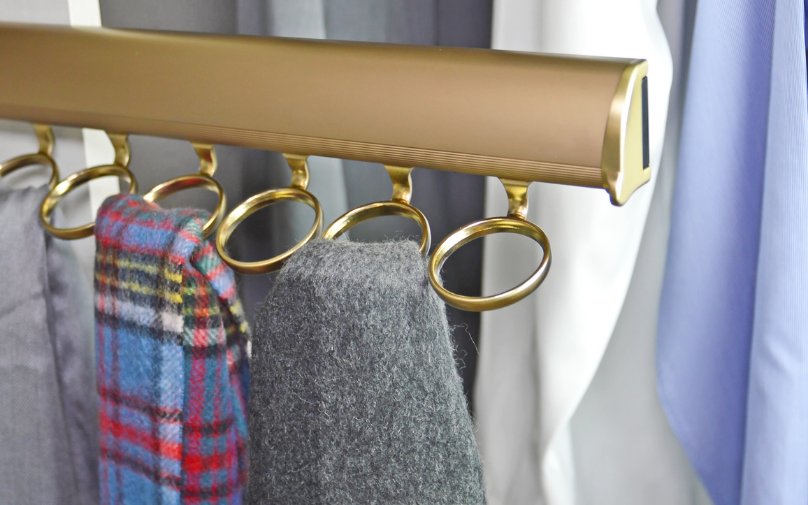
Slim velvet or wood hangers in one style save several inches of rod space and keep things from sliding off. Use bins only for small, loose items like belts, scarves or swimwear, and label them. Avoid filling shelves with bins just to look tidy; a bin you can’t see into becomes a junk drawer.
When organizing isn’t enough: fix the layout
If you’ve done all of this and the closet is still overflowing, the problem is the space, not the method. Signs you need a better layout:
- One long rod with clothes packed shoulder to shoulder and empty wall above and below it.
- Folded items stacked on a deep wire shelf where they slide and fall.
- Shoes in a pile on the floor.
- No drawers, so small items live in baskets or a dresser in the bedroom.
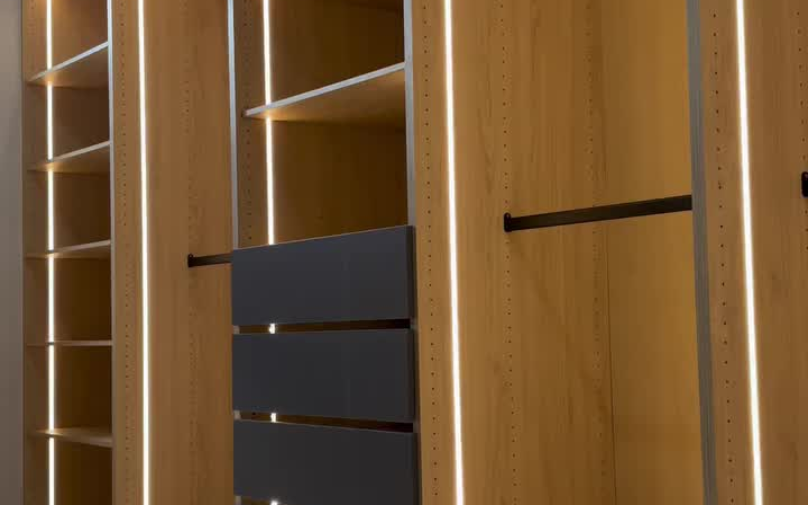
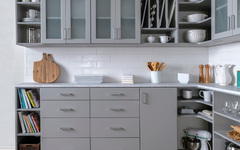
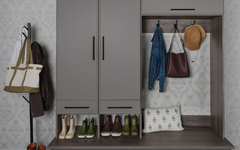
A custom closet system fixes this by using the full height of the wall and sizing each section to what you own. In a standard reach-in, that often adds 50% to 100% more usable storage without changing the footprint. See our guides to maximizing a reach-in closet and choosing a closet organizer system.
How to keep it organized
- One in, one out. When something new comes in, something old goes to the donate bag.
- Keep a donate bag in the closet so decluttering happens as you go.
- Reset for five minutes a week. Rehang strays and refold the shelf you use most.
- Review twice a year. Spring and fall are good moments in Florida to rotate the few seasonal pieces and do a quick edit.
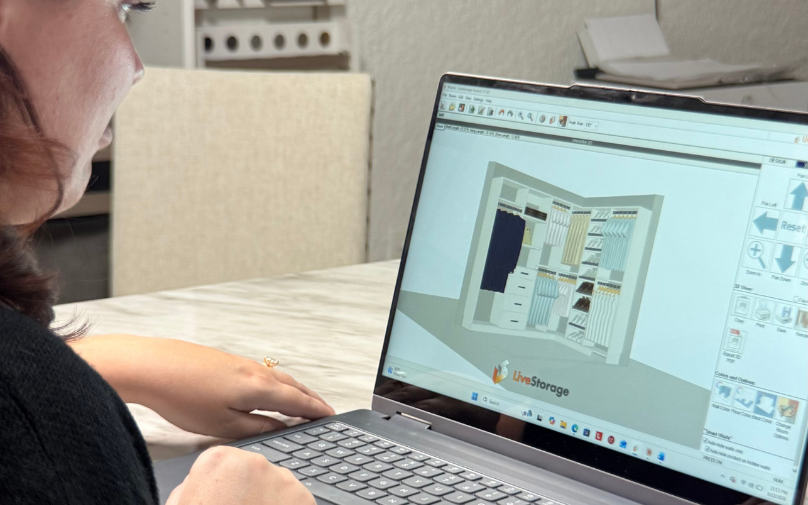
We measure your space, count what you need to store and design a layout in 3D before anything is built.
Frequently asked questions
What order should I organize my closet in?
Empty it, declutter, group by category, then put things back zone by zone: hanging first, then shelves, drawers and shoes. Doing it in this order means you only size each zone once.
How do I organize a small closet?
Use double hang wherever you can, add shelves above the top rod, keep shoes on a shelf instead of the floor and move off-season items out. In a very small closet, a custom layout makes the biggest difference because every inch is planned.
Is it better to organize a closet by color or by type?
By type first, then by color within each type. It is faster to find what you need and still looks tidy.
How long does it take to organize a closet?
A typical reach-in takes an afternoon; a large walk-in can take a full day. Installing a custom closet system usually takes one day once it is designed.
Free in-home design and a 3D plan with an exact price, before anything is built.


