



















Take everything out, keep what you wear and love, and let go of what doesn’t fit, is damaged or hasn’t been worn in a year. Use the 80/20 rule or the hanger trick if you get stuck, then donate the same week so the bags don’t come back in.
Decluttering is the step that makes every other closet fix work. You can’t organize your way out of having too much, and even a well-designed custom closet will fill up if nothing ever leaves. The good news: you don’t need a perfect system. You need a clear way to decide and a plan for what goes out the door.
Below is the simple four-step process we recommend to clients before we design their closet, followed by five popular methods (including the KonMari method and the 80/20 rule) so you can pick the one that fits how you think.
The four-step closet declutter
1. Empty one section at a time
If a whole walk-in feels overwhelming, start with one category: tops, then pants, then shoes. Take every item in that category out and put it on the bed. Seeing everything at once is what makes duplicates and forgotten pieces obvious.
2. Sort into keep, donate, sell and toss
Hold each piece and decide quickly. Keep it if you’ve worn it in the last year, it fits now and you’d buy it again. Anything stained, torn or stretched out goes to textile recycling, not donation.
3. Be honest about “maybe”
Put true maybes in one box, write the date on it and store it out of the closet. If you haven’t opened it in three months, donate it without looking inside.
4. Get it out of the house
Decluttering fails when the donate bags sit in the garage for months. Schedule the drop-off the same day. Around Orlando, Goodwill of Central Florida, the Salvation Army and local church thrift stores accept clothing, and many offer pickup for larger loads.
Method 1: The 80/20 rule
Most people wear about 20% of their clothes 80% of the time. The 80/20 rule turns that into a test: identify the pieces you actually reach for every week, then question everything else. A quick way to find your 20% is to look at what’s in the laundry over two weeks. Those are your real wardrobe. The rest needs a reason to stay.
Method 2: KonMari (Marie Kondo)
Marie Kondo’s method asks you to declutter by category, not by room, and to keep only items that “spark joy”. You start with clothes, gather every piece you own in one place and hold each one before deciding. What stays gets folded vertically so it stands up in a drawer, and hanging clothes are arranged so they rise to the right: long, heavy pieces on the left and shorter, lighter ones on the right.
Her approach works best for people who decide emotionally. If “spark joy” feels vague, swap it for “would I wear this next week?”
Method 3: The Japanese approach to keeping less
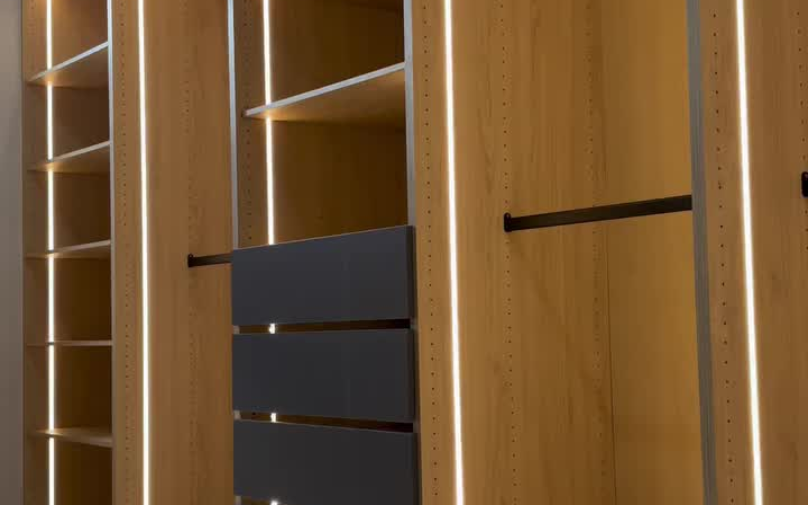
Beyond KonMari, Japanese decluttering ideas like danshari focus on refusing what you don’t need, discarding what you don’t use and letting go of attachment to things. In a closet, that means fewer purchases, a quick decision when something stops working for you and a space where every item is visible. It pairs well with a custom closet because open shelves and well-lit sections make it easy to see what you have.
Declutter before you measure for a new closet, not after. When we design a closet we size every rod, shelf and drawer to what you own, so a closet planned around clothes you were going to donate wastes space you’re paying for.
Method 4: The hanger trick
Turn every hanger backwards on the rod. When you wear something and hang it back, turn its hanger the right way. After six months, anything still on a backwards hanger is a strong candidate to go. It takes no effort upfront and gives you real data about what you wear.
Method 5: A simple capsule wardrobe
A capsule wardrobe is a small set of pieces that all work together, often 30 to 50 items per season, not counting workout clothes and underwear. Minimalists who keep capsule wardrobes often own fewer than 100 pieces of clothing in total. You don’t have to go that far, but setting a target number per category (for example, 10 T-shirts or 6 pairs of jeans) makes decisions much easier. Florida’s climate helps: with a mostly warm-weather wardrobe, a capsule is easier to build than in a four-season city.
After you declutter: make it easy to stay that way
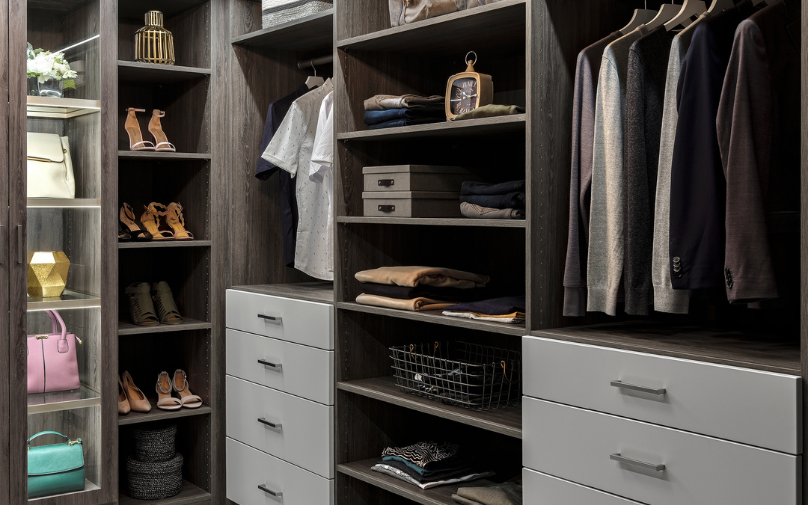
Once the closet is down to what you wear, give everything a fixed place so clutter can’t creep back. Our step-by-step guide on how to organize a closet covers the order to put things back. If you find there still isn’t a good spot for shoes, folded clothes or accessories, it’s a layout problem. That’s where a custom closet helps: every category gets a section sized for it, so there’s no pile on the floor.
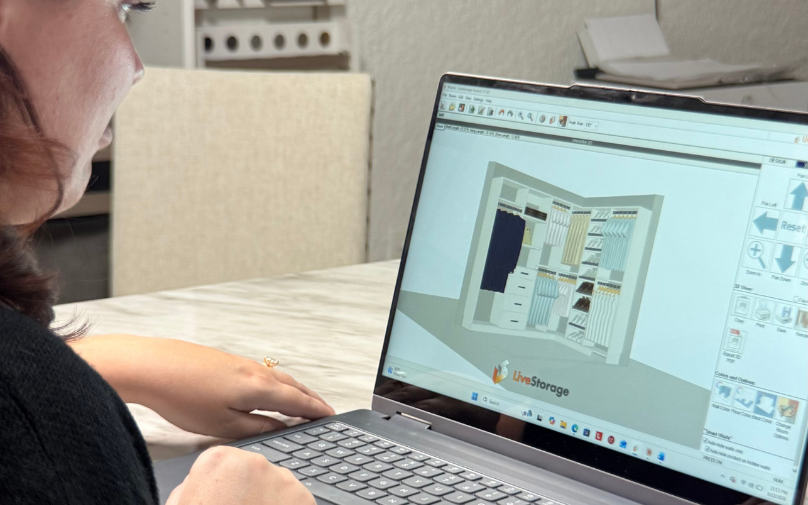
Our designers plan hanging, shelves, drawers and shoe storage around your actual wardrobe.
Frequently asked questions
How do I decide what clothes to get rid of?
Let go of anything that doesn’t fit, is damaged, or hasn’t been worn in a year. If you hesitate, ask whether you would buy it again today.
What is the 80/20 rule for closets?
It is the idea that you wear about 20% of your clothes 80% of the time. Use it to identify your core wardrobe and question everything outside it.
How does Marie Kondo organize her closet?
She declutters by category, keeps only what sparks joy, folds clothes vertically in drawers and hangs clothes so lengths rise from left to right.
How many clothes do minimalists have?
It varies, but many minimalists keep a capsule of 30 to 50 pieces per season and fewer than 100 items in total.
Where can I donate clothes in Orlando?
Goodwill of Central Florida, the Salvation Army and many church thrift stores accept clothing. Damaged items can go to textile recycling bins.
Free in-home design and a 3D plan with an exact price, before anything is built.


