








Yes, if you need a room to do two jobs. A Murphy bed, or wall bed, gives you a real mattress at night and an open office, gym or playroom by day. It is worth it when the room gets used daily for something else and overnight guests come a few times a month. It is not worth it if someone sleeps in the room every night, or if the wall cannot be anchored securely.
Spare bedrooms are expensive square footage. In many Central Florida homes, the guest room sits empty most of the year while the home office squeezes into a corner of the kitchen. A Murphy bed fixes that by folding a full bed into a cabinet on the wall. Here is how to decide whether one is right for your home, based on the wall beds our designers plan for guest rooms, offices and condos across Orlando.
What is a Murphy bed?
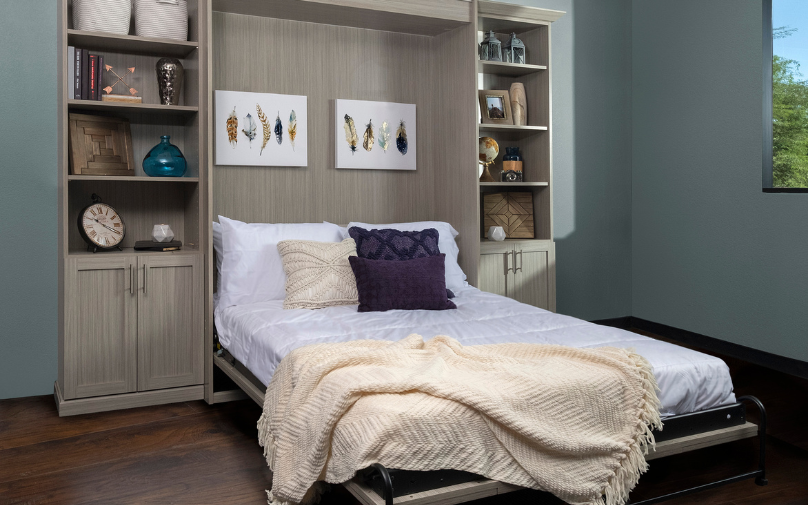
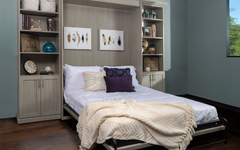
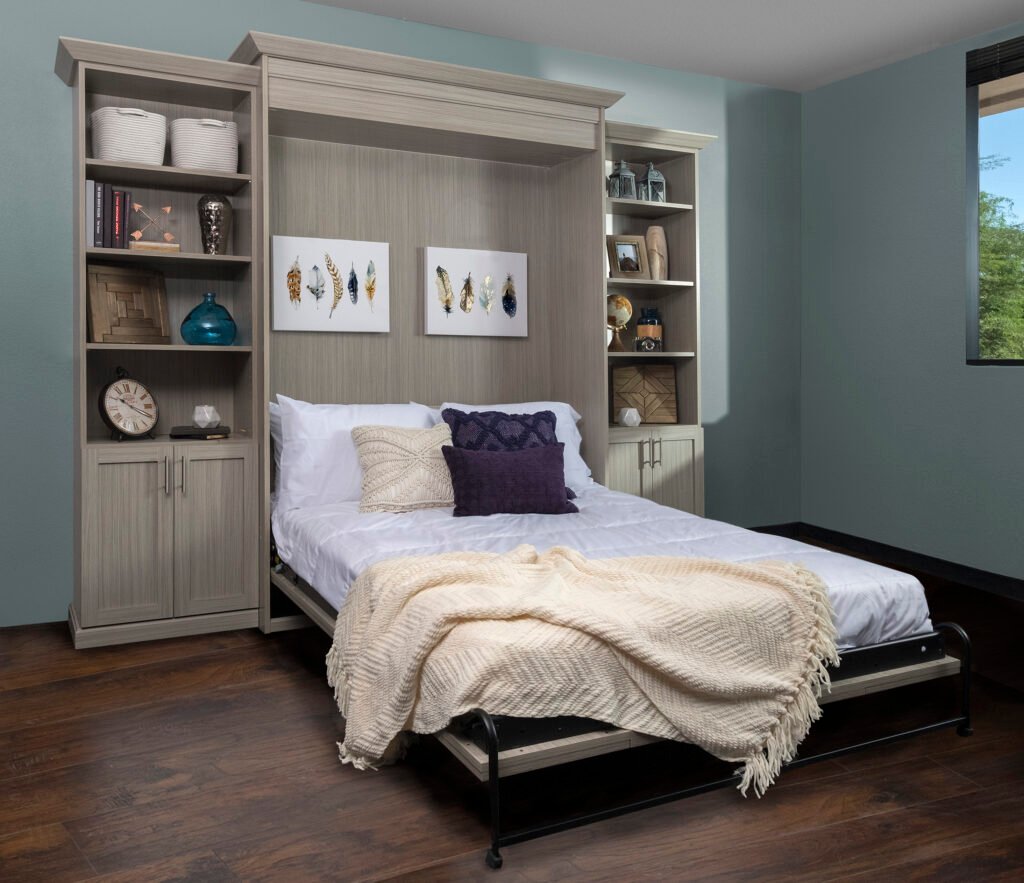
A Murphy bed is a bed that folds vertically or horizontally into a wall cabinet. A spring or piston mechanism balances the weight, so the bed lifts and lowers with one hand. Modern wall beds use a standard mattress, not a thin fold-out pad, and many come with side cabinets, shelves, a desk or a sofa built in. Wall bed and Murphy bed mean the same thing.
Pros of Murphy beds
- Two rooms in one. An office, gym, craft room or playroom during the day, a guest room at night.
- A real mattress. Unlike most sofa beds, guests sleep on a standard mattress with a proper base.
- Fast to make up. Bedding stays on the mattress, held by straps, so the bed is ready in seconds.
- Storage around it. Side cabinets and upper shelves hold linens, pillows and office supplies.
- Clean look. Closed, it looks like a built-in cabinet or bookcase.
Cons of Murphy beds
- Cost. A wall bed costs more than a bed frame or a sofa bed, because of the mechanism and the cabinetry.
- Installation matters. It must be anchored securely to the wall or floor. This is not a project for drywall anchors.
- Floor space when open. When the bed is down, you need the same clear floor as a regular bed.
- Daily use. For someone who sleeps in the room every night, folding the bed up each morning gets old.
- Mattress limits. Most mechanisms are designed for mattresses within a certain thickness and weight. Very thick pillow-top or heavy hybrid mattresses may not fit.
Are Murphy beds comfortable?
As comfortable as the mattress you put on them. Because wall beds use a standard mattress on a rigid platform, they are usually much more comfortable than sofa beds. Ask what mattress thickness the mechanism supports, typically a medium-profile foam or hybrid mattress, and choose the most comfortable one within that range.
Are Murphy beds safe?
Yes, when installed correctly. Safety comes down to three things: the bed must be anchored to the structure, the mechanism must be matched to the mattress weight, and the bed should have a lock or latch that keeps it closed. Teach children that the bed is not a climbing structure. Most incidents with wall beds involve beds that were not anchored or were modified.
Before choosing between vertical and horizontal, lie on the floor where the open bed would be. If your head ends up under a window or the foot of the bed blocks the door, flip the orientation.
Murphy bed vs sofa bed vs daybed
| Murphy bed | Sofa bed | Daybed / trundle | |
|---|---|---|---|
| Comfort for guests | High (real mattress) | Low to medium | Medium |
| Daytime use | Open floor or desk | Seating | Seating |
| Floor space by day | About 18 to 24 in of depth | Sofa footprint | Twin bed footprint |
| Storage | Built-in cabinets possible | None | Some (trundle drawer) |
| Cost | Highest | Low to medium | Low to medium |
Room size: will a Murphy bed fit?
- Wall width: a vertical queen needs roughly 6 to 7 feet of wall including the cabinet; with side cabinets, plan 9 to 11 feet.
- Ceiling height: vertical queens need about 7.5 feet of ceiling height; horizontal (side-tilt) models fit under windows and low ceilings.
- Floor depth when open: about 7 feet for a queen, plus a walkway at the foot.
- Obstacles: outlets, switches, vents and baseboards behind the cabinet have to be planned.
What drives the price of a Murphy bed?
- Bed size: twin, full or queen.
- Orientation: vertical or horizontal.
- Cabinetry: just the bed, or side towers, bridge cabinets and shelving.
- Add-ons: a fold-down desk, a sofa, lighting, or a bookcase front.
- Finish: solid colors vs textured woodgrains.
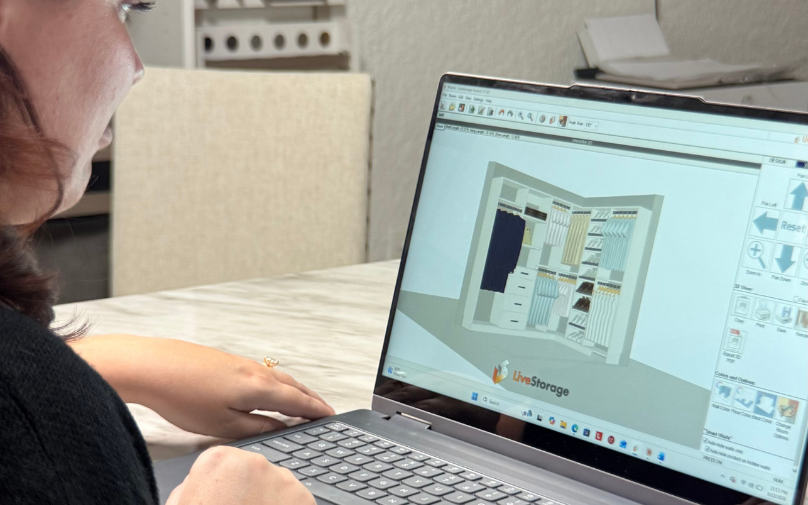
Closets Orlando designs wall beds as part of the room, with side storage and finishes that match. You get a 3D design and an exact price at the free in-home visit. See our wall beds page.
When a Murphy bed is worth it
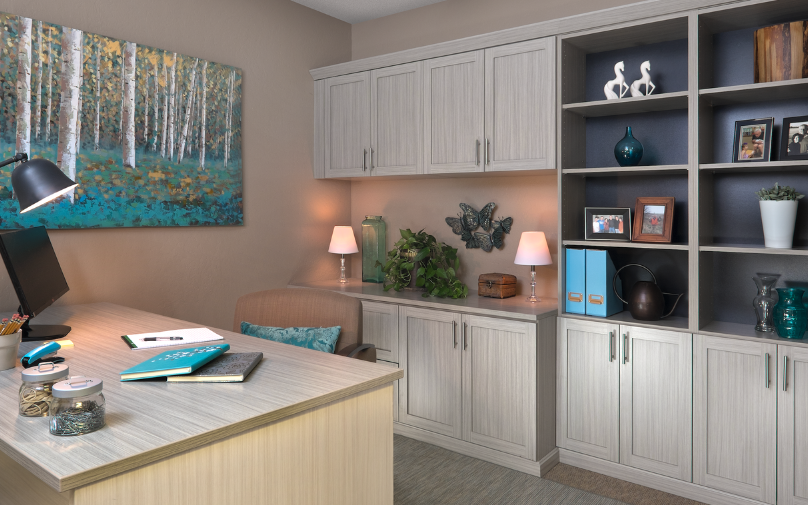
- The room is a daily office, gym or hobby room and guests visit occasionally. See home office storage ideas.
- You live in a condo or townhome without a dedicated guest room.
- You host family for the holidays and the seasonal visitors that come with living in Central Florida.
- A child’s room needs more floor space for play.
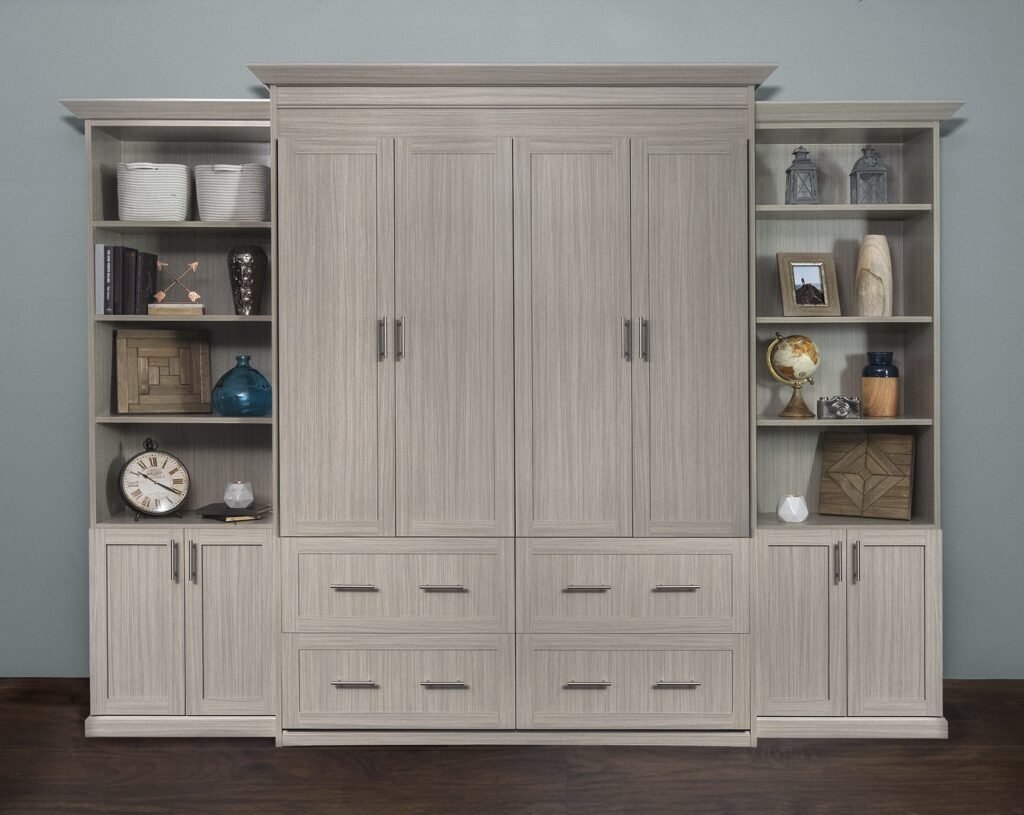
Wall beds with matching side storage, shelves or a desk, designed in 3D in your Orlando home with an exact price.
Frequently asked questions
Are Murphy beds worth the money?
Yes, if the room is used daily for something else and guests stay occasionally. Not if someone sleeps there every night.
Are Murphy beds comfortable?
They use a standard mattress on a rigid platform, so they are usually far more comfortable than sofa beds.
Are Murphy beds safe?
Yes, when anchored to the structure, matched to the mattress weight and fitted with a lock or latch.
What size room do you need for a Murphy bed?
A queen needs about 6 to 7 feet of wall, about 7.5 feet of ceiling for a vertical model, and about 7 feet of floor depth when open.
Can you use a regular mattress on a Murphy bed?
Yes, within the thickness and weight the mechanism supports. Very thick or heavy mattresses may not work.
What is the difference between a Murphy bed and a wall bed?
None. They are two names for the same fold-up bed.
Free in-home design and a 3D plan with an exact price, before anything is built.