


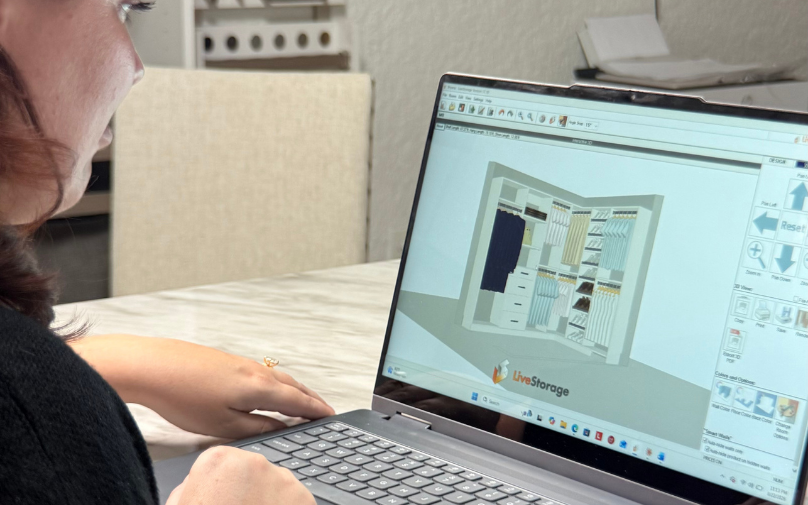
We measure your space, design it in 3D while you watch, and install it with our own crew. No subcontractors, no surprises.
Boutique layouts with islands, seating, and display lighting.
Freestanding storage for rooms with no built-in closet.
Pull-out shelving that puts every jar within reach.
Double the usable space in a standard hallway closet.
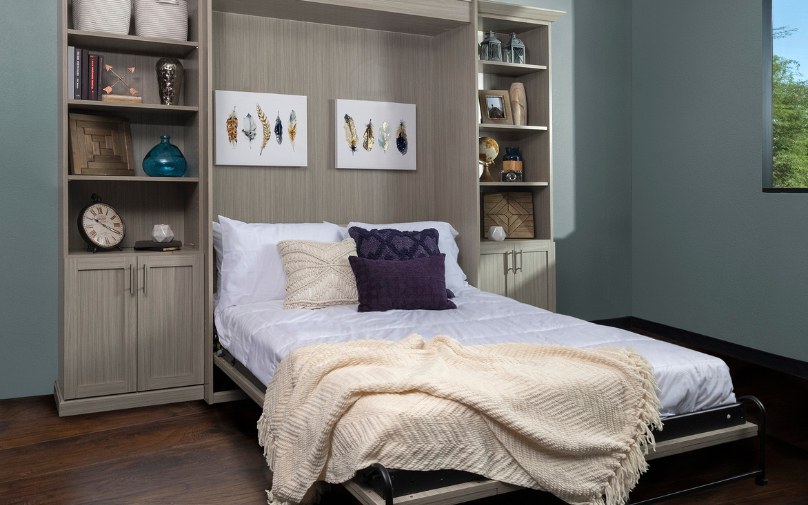
A guest room and an office in the same square footage.
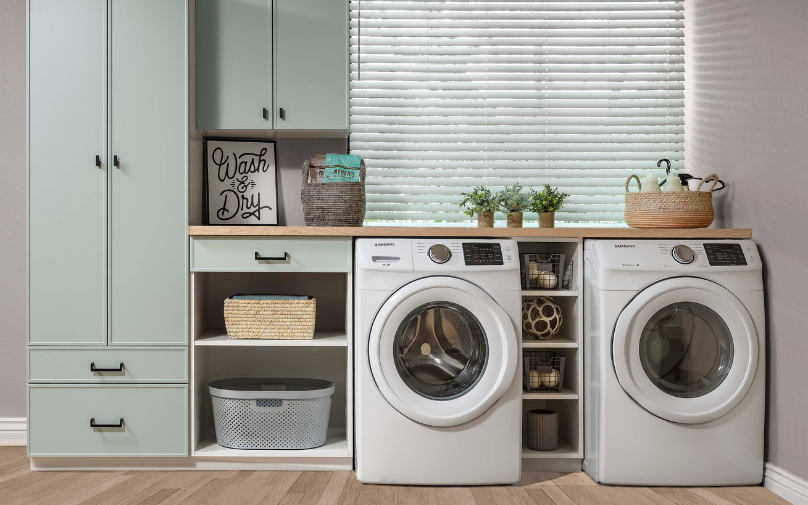
Counters, hampers, and cabinets that hide the machines.
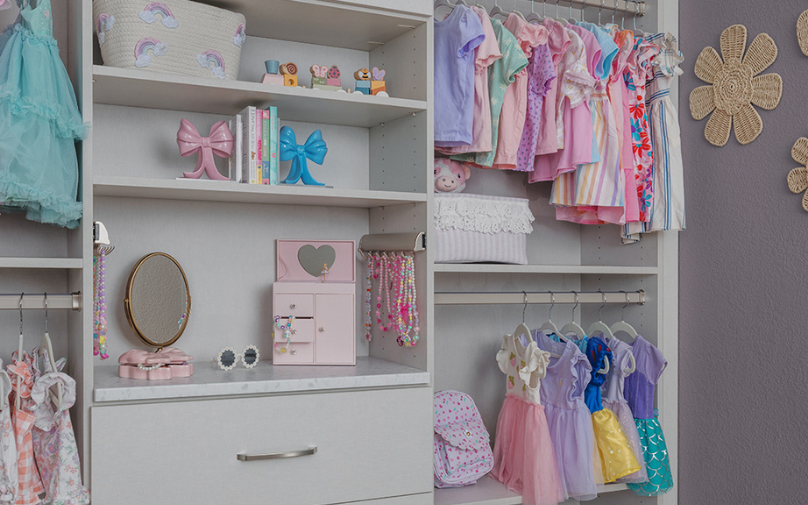
Low rods and open bins that grow with them.
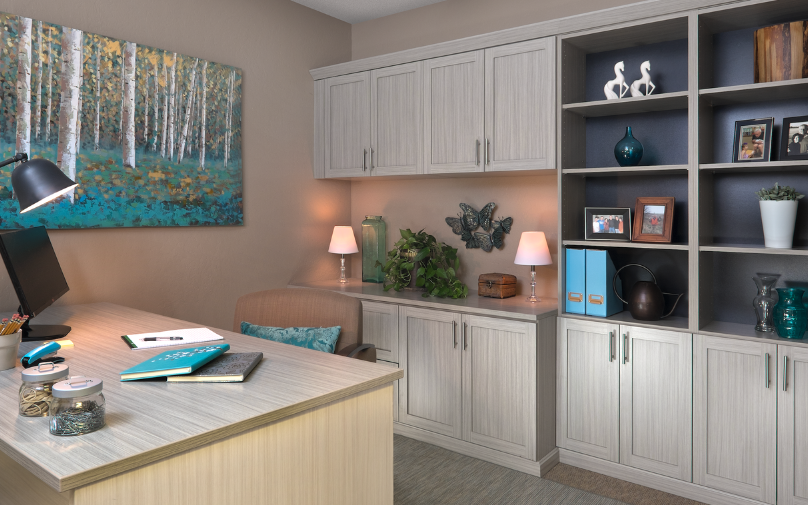
Desks, shelving, and file storage that fit the room.
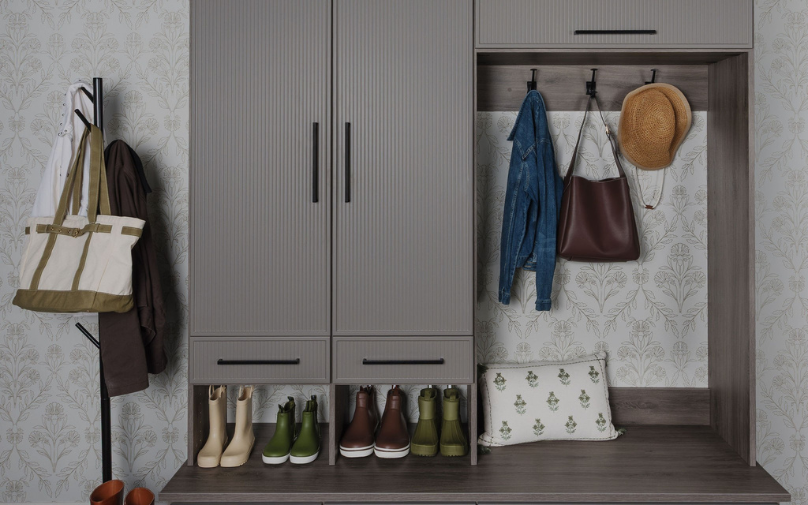
Benches, hooks, and cubbies that stop the pile at the door.
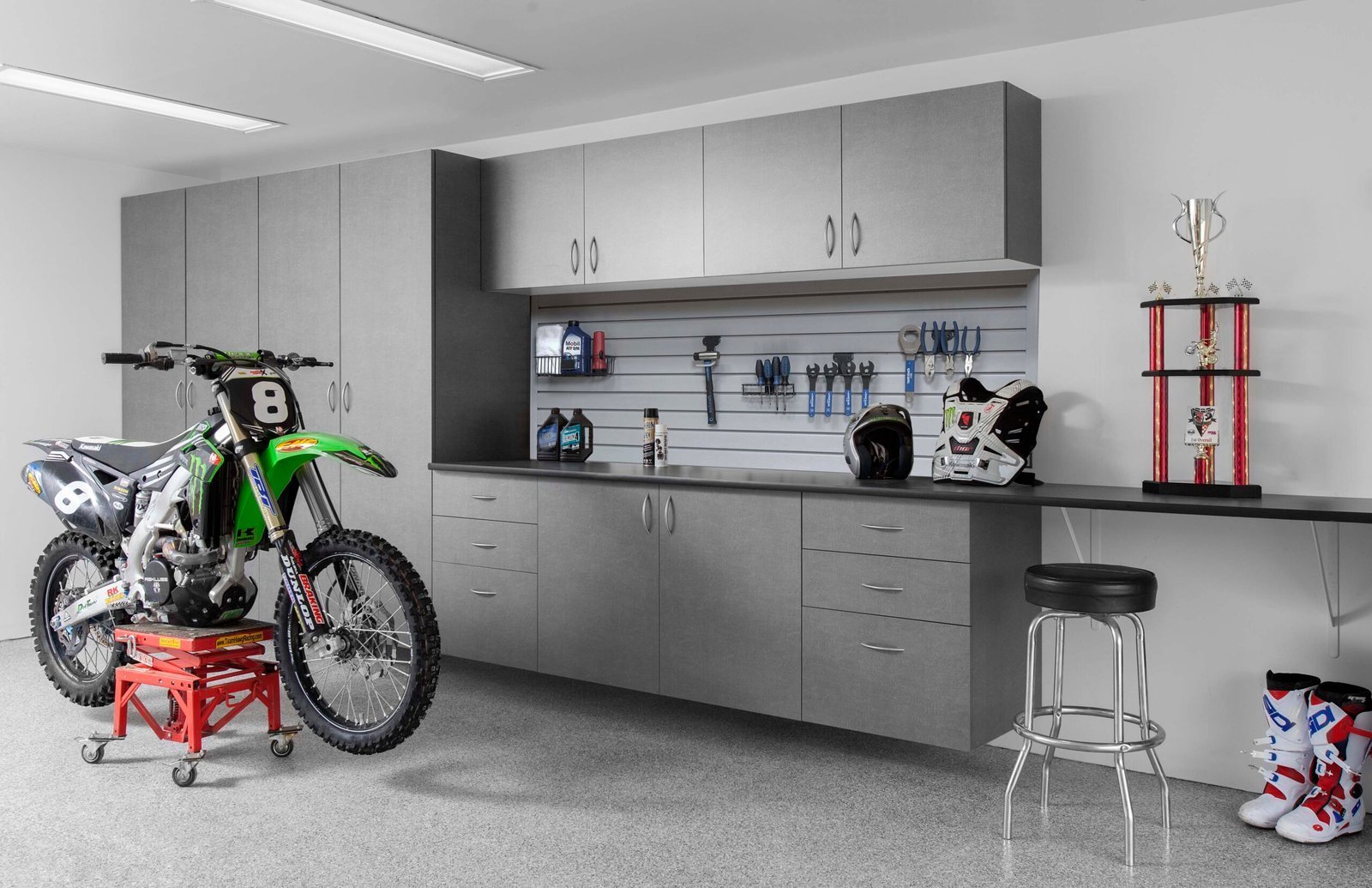
Get everything off the floor and behind closed doors.
Built to your measurements, one room or the whole house.
Not sure where to start? We measure and design your space for free, with no obligation.
Who we are and why homeowners across Central Florida keep calling us back.
Call, text, or send us your floor plan. We answer the same day.
Orange, Seminole, Lake, and Osceola counties, plus everything in between.
Consultation, 3D design, build, install. You never lift a finger.
Storage ideas, before-and-afters, and answers to what people ask us most.
Serving Orange, Seminole, Lake, and Osceola counties.
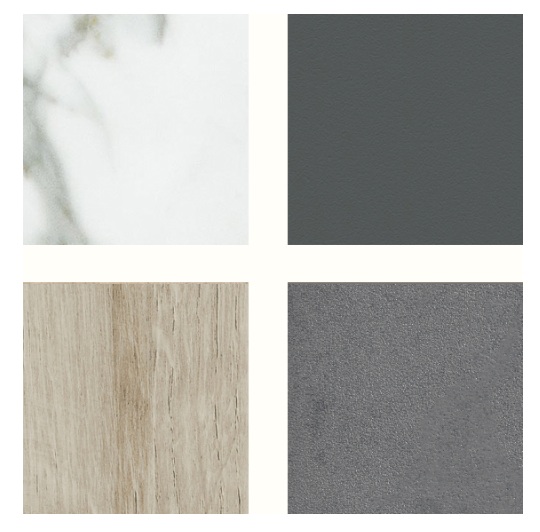
Whites, greys, and deep tones with a matte finish.
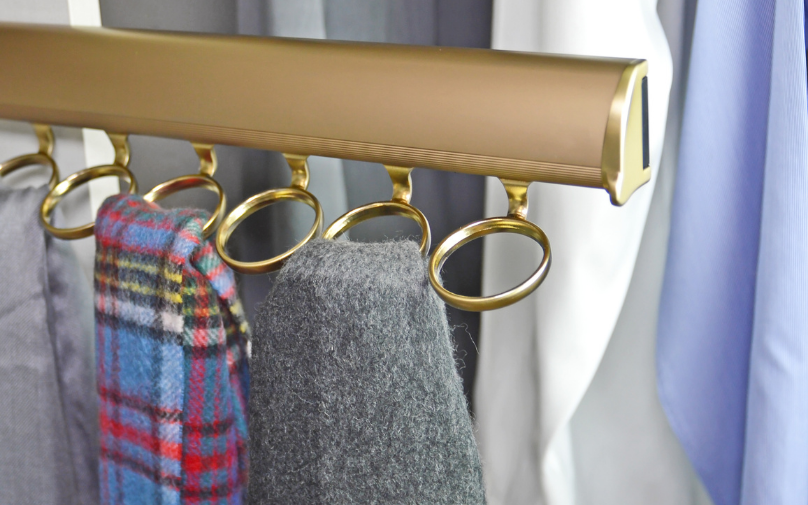
Valet rods, jewelry trays, belt racks, and pull-out hampers.
Shelf and rod lighting that turns on when the door opens.
Durable surfaces built for heat, humidity, and heavy use.
Every finish, in your home. We bring the physical samples to your consultation.
Free in-home design · Lifetime warranty
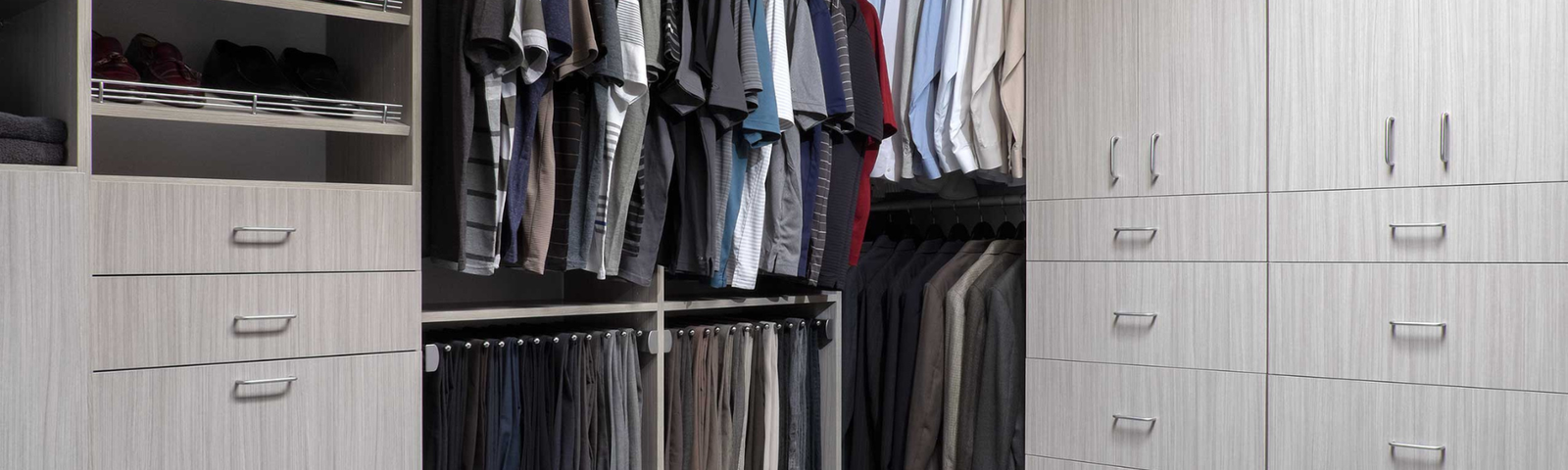
A lot of people think they have a clothing problem when, in reality, they have a closet system problem.
After years of installing and selling closet systems, I’ve noticed the same thing over and over again: most closets are not designed to help people stay organized. They usually have one basic shelf, one hanging rod, maybe some wire shelving, and then the homeowner is expected to somehow make everything fit.
That is why “closet organize” tips only go so far. You can fold your clothes perfectly, buy matching hangers, add a few baskets, and still feel like your closet is working against you. If the layout is weak, too basic, or not made for your actual space, the closet will keep getting messy.
The best way to organize a closet is not just to add more bins. It is to create a system that gives every item a place: hanging clothes, folded clothes, shoes, accessories, seasonal pieces, and the small things that usually end up everywhere.
In this guide, I’ll walk you through how to organize a closet in a way that actually works for real life, whether you have a walk-in closet, a reach-in closet, or a small bedroom closet that needs to work harder.
Most closets feel messy because they are under-designed.
That may sound simple, but it is one of the biggest things I see in real homes. People often blame themselves for not keeping things tidy, but many closets are built with the bare minimum: one rod for hanging clothes and one shelf above it. That setup does not give you enough zones, enough flexibility, or enough storage options.
When everything has to share the same limited space, clutter is almost guaranteed.
Shirts get pushed into jackets. Shoes pile up on the floor. Sweaters get stacked too high. Bags end up in corners. Small accessories disappear. Eventually, the closet becomes hard to use, even if you clean it regularly.
Of course, decluttering helps. But getting rid of clothes is not always the full answer.
A good closet organization system should match the way you actually live. If you fold a lot of clothes, you need shelves. If you own many smaller items, you need drawers. If you have a lot of shirts, jackets, or dresses, you need the right amount of hanging space. If you rotate seasonal clothing, you need upper storage.
The closet should support your routine instead of forcing everything into one crowded area.
Wire shelving can work for light storage, especially in simple closets. But it has limits.
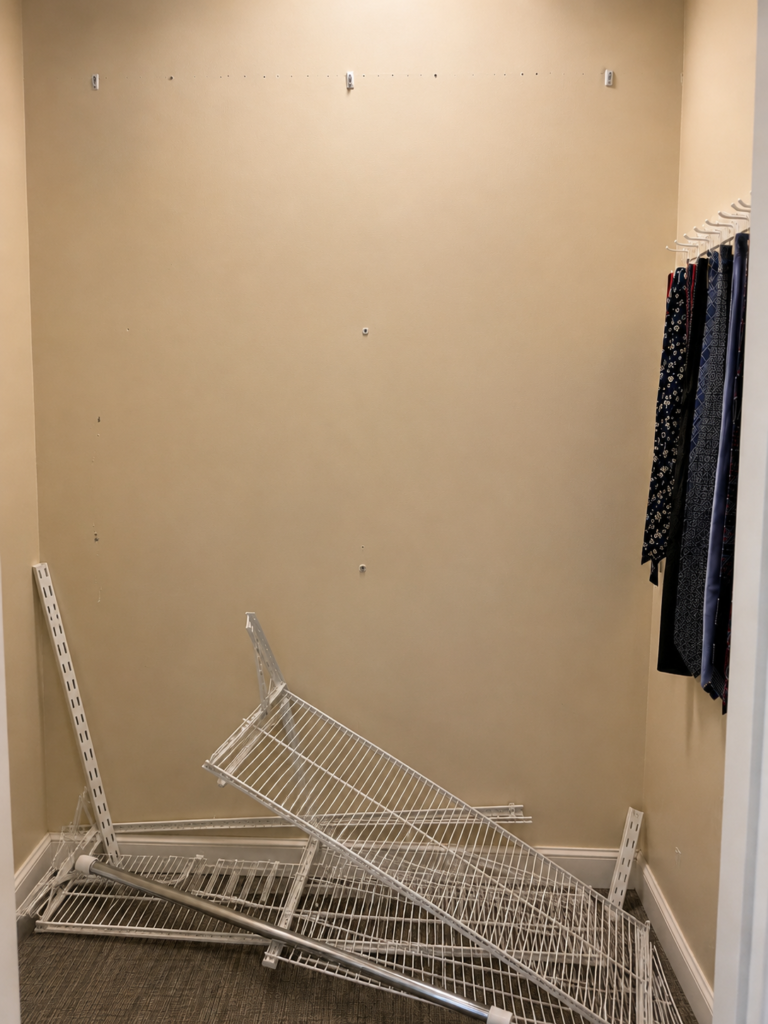
I recently visited a home where the entire wire shelf had come down. The issue was not that the homeowner did something unusual; the system was simply being asked to hold more than it was designed for. That is common when people try to use a basic wire setup as their main long-term closet organizer.
Wire shelves also do not always create the cleanest look. Clothes can sit unevenly, smaller items can fall through the gaps, and the layout usually does not use the full wall as well as it could.
A poor closet layout creates clutter slowly.
At first, it may seem fine. Then you add more clothes, more shoes, more jackets, more storage bins, and suddenly the system cannot keep up. When there are not enough shelves, drawers, rods, or zones, everything starts competing for space.
That is why the best closet organization starts with the layout, not the accessories.
Before you buy baskets, bins, hangers, or drawer dividers, look at the structure of your closet.
Ask yourself:
A lot of store-bought closet organizers can help, but they usually come in fixed sizes. If your wall is wider, narrower, deeper, or shaped differently, the result may not feel custom. You can end up with awkward gaps, unused corners, or storage that looks like it was forced into the space.
The first step is to divide your items by how they should be stored.
Hanging items usually include shirts, jackets, dresses, coats, and delicate pieces. Folded items may include jeans, sweaters, workout clothes, and everyday basics. Smaller items like socks, underwear, belts, accessories, or personal items usually work better in drawers.
Seasonal clothing should not take up your most valuable everyday space. Items you only use part of the year can go on upper shelves or in labeled storage boxes.
One of the biggest mistakes people make is measuring only the space where they think a closet organizer will go.
Instead, measure the full wall: width, height, and depth. A better closet system can often use space that a basic wire shelf ignores, especially the upper part of the closet.
In many installations, one of the biggest improvements comes from using more vertical space. The closet does not get bigger, but it feels bigger because the wall is finally being used properly.
A closet should make your daily routine easier.
If you wear the same items often, keep them at eye level or within easy reach. If you rarely use something, move it higher. If small items create visual clutter, hide them in drawers. If folded clothes keep falling over, use shelves with better spacing.
The goal is not just to store more. The goal is to make the closet easier to use every day.
Not every closet needs the same solution. The right choice depends on your space, your clothing, your budget, and how long you want the system to last.
Wire shelving can be useful for simple storage. It is usually affordable, easy to find, and works well for lighter items.
It may be enough for:
But for a main bedroom closet, especially one that holds a lot of clothing, shoes, or heavier items, wire shelving can start to feel limited.
Store-bought organizers are convenient. You can walk into a big-box store, pick up a system, and install it quickly.
The downside is that these products are made in standard sizes. Real closets are not always standard.
I’ve seen many walk-in closets where store-bought units leave strange gaps because the pieces were never made for that exact wall. The closet may technically have a new organizer, but it still does not feel fully optimized.
That matters because closet organization is not only about adding shelves. It is about using the space intelligently.
A custom or modular closet system makes more sense when you want better use of space, stronger support, and a cleaner look.
This is especially true if:
A good closet system should fit the wall, support the weight, and match the way you organize your clothes.
Most people are not using the full height of their closet.
This is one of the easiest ways to gain more storage without making the room bigger. If your closet has one rod and one shelf, there is probably a lot of unused space above, below, or beside your current setup.
A good closet organizer should use the wall, not just a small strip of it.
Upper shelves are perfect for things you do not need every morning.
Use them for:
This keeps your daily items easy to reach while still using the full closet.
Double hanging is one of the most effective ways to increase capacity.
Instead of one long rod with empty space underneath short clothing, you can use two rods: one upper rod and one lower rod. This works especially well for shirts, blouses, folded pants on hangers, jackets, and kids’ clothing.
If most of your clothing is short-hang, double rods can almost double your hanging space in the same area.
When we install a better closet system, one of the biggest changes is how much more usable the wall becomes.
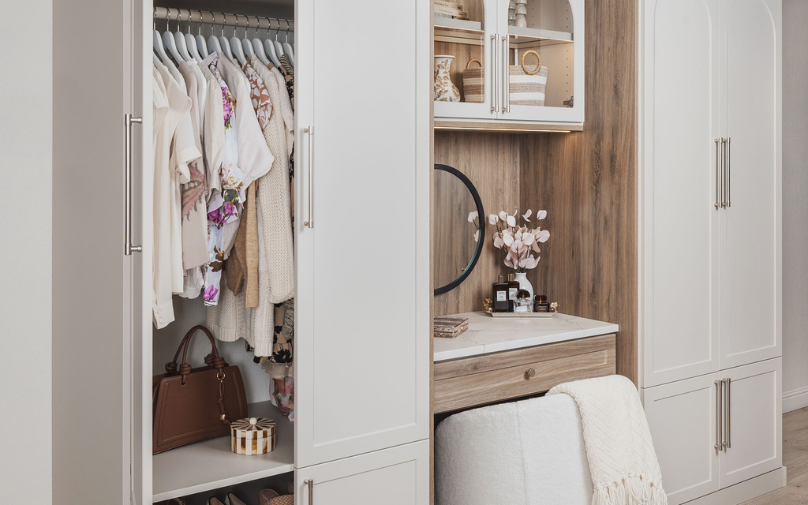
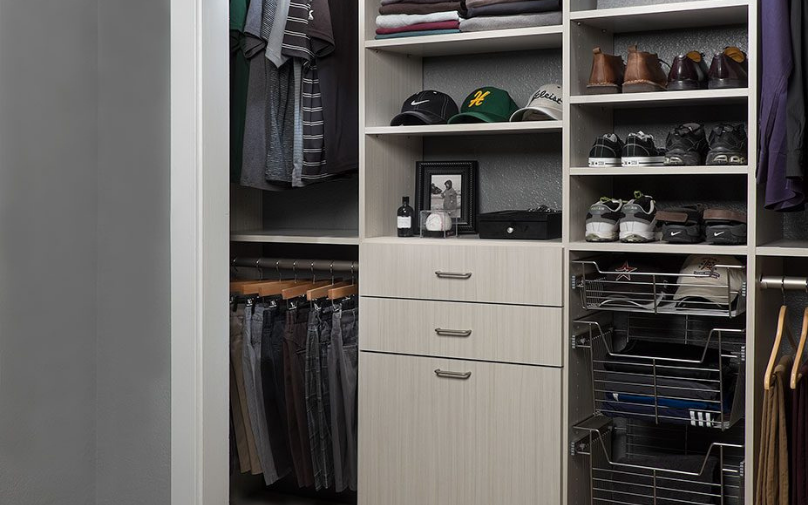
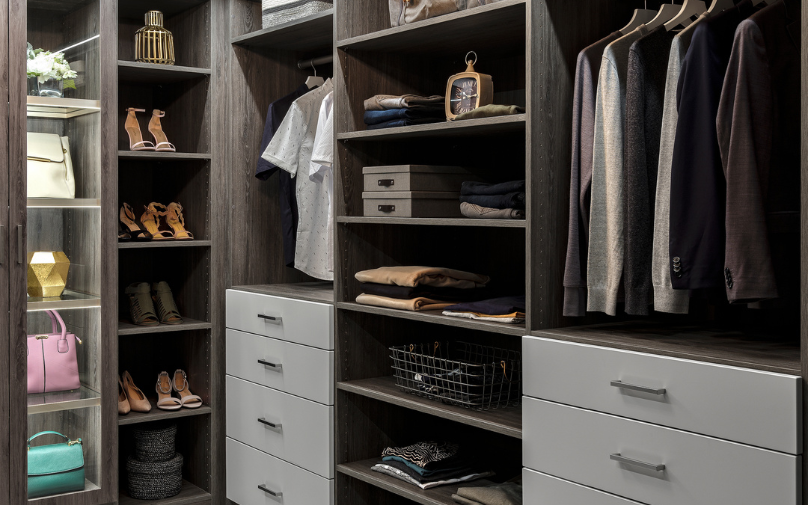
Instead of one shelf at a fixed height, the closet can include upper shelves, adjustable shelves, drawers, shoe storage, and multiple hanging sections. That creates a layout that feels intentional, not improvised.
This is where a custom closet or modular closet system can make a major difference.
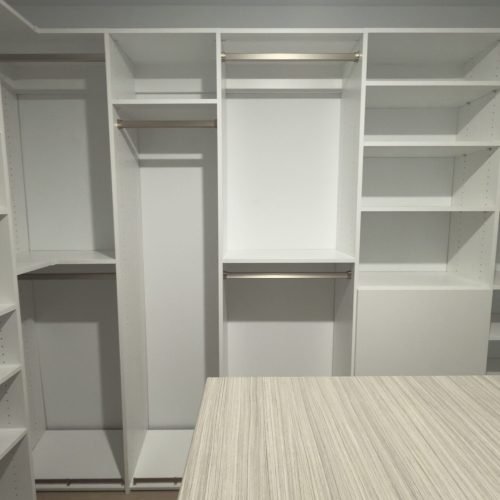
A well-organized closet needs balance.
Too much hanging space can waste room. Too many shelves can make the closet feel crowded. No drawers means small items stay exposed. The best closet organization system combines different types of storage based on what you actually own.
Hanging space works best for clothes that wrinkle easily or need to stay visible.
Hang items like:
If you have many short items, use double hanging rods. If you have dresses or coats, leave a longer hanging section.
Shelves matter because not every piece of clothing needs to hang.
Folded jeans, sweaters, workout clothes, T-shirts, and everyday basics often work better on shelves. Adjustable shelves are especially useful because you can change the spacing based on what you store.
The mistake is stacking too high. Tall piles fall over, hide what is underneath, and make the closet harder to maintain.
Use shelves to create smaller, cleaner categories.
Drawers are not just about storage. They create visual calm.
In real homes, drawers make a huge difference because they keep smaller items out of sight. Socks, underwear, accessories, belts, scarves, and personal items can make a closet look messy fast when everything is exposed.
A closet with drawers usually feels more polished because fewer small things are visible.
That is one reason custom closet organizers often look better than basic systems: they hide clutter while still keeping it accessible.
A walk-in closet gives you more space, but that does not automatically mean it will be organized.
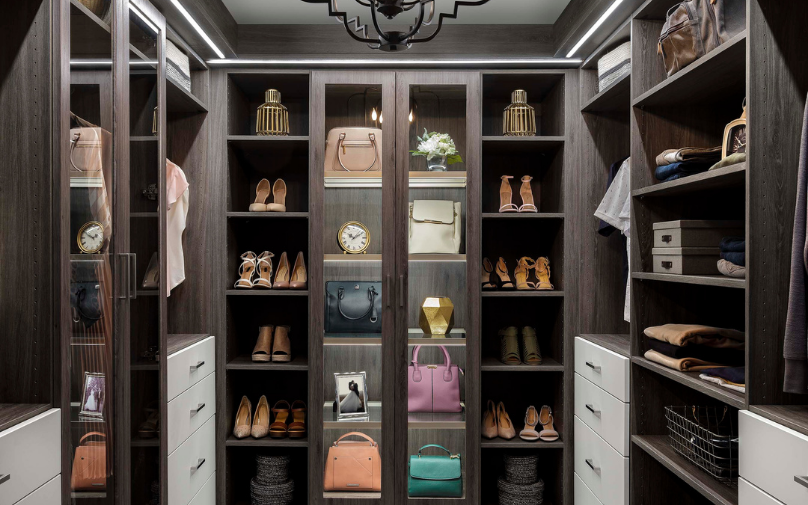
In fact, a poorly designed walk-in closet can waste a surprising amount of room. If the system does not fit the walls properly, you may end up with empty gaps, crowded corners, or long sections that do not match your clothing.
The best walk-in closet organization starts with zones.
Create areas for:
This makes the closet easier to use because every category has a home.
Walk-in closets often expose the weakness of store-bought organizers. Because they come in standard sizes, they may not fit the exact wall.
That can leave wasted inches on the sides, empty corners, or sections that feel disconnected.
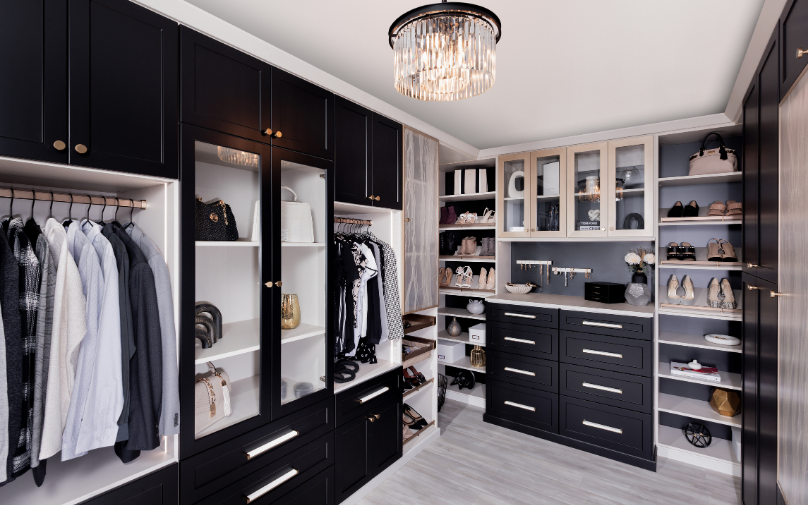
A better-fit system can use more of the wall and create a more built-in look.
A walk-in closet should feel easy to move through.
Avoid overcrowding every wall. Keep daily items accessible. Use drawers to hide small things. Use upper shelves for storage you do not need every day. Add shoe storage if shoes usually end up on the floor.
The goal is to make the closet look clean and function smoothly.
A small closet needs smart planning.
Because there is less space, every shelf, rod, drawer, and bin has to earn its place. The biggest mistake is leaving the closet with only one hanging rod and one shelf. That setup rarely gives you enough structure.
In a reach-in closet, double hanging can completely change the space.
Use one rod above and one below for shorter clothing. This is ideal for shirts, jackets, pants, skirts, and everyday pieces. Then reserve a smaller section for long-hang items if needed.
This simple change can create much more usable storage.
Shelves are useful in small closets, but spacing matters.
If the shelves are too far apart, you waste vertical space. If they are too close, they become frustrating to use. Adjustable shelves are usually the best option because they let you change the layout over time.
Use shelves for folded clothes, bags, storage boxes, or shoes.
Small closets can look messy quickly because everything is close together.
Drawers, bins, and baskets help control that visual clutter. Use them for smaller items that do not need to be displayed. Even one or two drawers can make a small closet feel more organized.
The cleaner the visual layout, the easier the closet feels to use.
Closet organization mistakes usually happen before the organizing even starts.
People buy products too quickly, skip measuring, or focus only on accessories instead of the full system. A good closet should be planned around the space, the clothing, and the daily routine.
One shelf and one rod is the most basic closet setup.
It may work for a while, but it does not give you enough zones. Everything gets mixed together, and the space under short-hanging clothes is often wasted.
A better closet organizer uses a combination of rods, shelves, drawers, and upper storage.
Never buy a closet system without measuring carefully.
Measure the width, height, depth, corners, doors, baseboards, and anything that may affect installation. A product that looks perfect online may not work well in your actual closet.
This is especially important for walk-in closets and non-standard spaces.
A closet has to hold real weight.
Clothes, shoes, bags, and storage boxes add up fast. If the system is weak, overloaded, or poorly installed, it may fail over time.
That is one reason I always look beyond appearance. A closet should look good, but it also needs to support everyday use.
The upper closet area is often wasted.
That space is perfect for seasonal items, storage boxes, extra bedding, bags, or things you do not need daily. If your closet stops too low, you are losing valuable storage.
Using vertical space is one of the smartest ways to maximize closet space.
Once the main system is right, small organization details can make the closet even better.
These ideas help improve both function and appearance.
Matching hangers make a closet look more organized instantly.
They create visual consistency, save space, and keep clothing at the same height. This is a simple upgrade that works in almost any closet.
Your most-used items should be easy to see and reach.
Keep daily shirts, pants, jackets, and shoes in the most accessible areas. Store less-used items higher up or farther back.
A closet should match your routine, not make you search every morning.
Seasonal clothing does not need prime closet space.
Use upper shelves or labeled bins for winter clothes, summer items, special occasion pieces, or anything you only use part of the year.
This keeps the main area open for daily use.
Small items are usually what make a closet look messy.
Drawers help keep those items contained. Use drawer organizers for socks, accessories, underwear, jewelry, belts, and other small pieces.
This makes the closet feel cleaner without making it harder to use.
A custom closet organizer is worth it when your current setup is wasting space, failing under weight, or making your daily routine harder.
It is not just about luxury. It is about function.
A better closet system can help you store more, see more, and use your space more efficiently.
One of the biggest benefits of a custom closet is that it can create more usable storage in the same space.
By using the full wall, adding shelves, adjusting hanging sections, and including drawers, the closet can hold more without feeling packed.
That is the power of a better layout.
Custom and modular closet systems usually look more finished than basic wire shelving or mismatched store-bought pieces.
They can create a clean, built-in appearance that makes the closet feel intentional. This matters not only for organization, but also for the overall look of the room.
A closet is not just something you look at. You use it every day.
That means durability matters. Shelves should support weight. Rods should be placed correctly. Drawers should open easily. The system should fit the wall and handle real clothing, not just look good in a photo.
A good closet system should fit the way you actually live.
The best way to organize a closet is to stop thinking only about hangers, bins, and baskets.
Those things help, but they are not the foundation. The foundation is the closet system itself.
If your closet has weak wire shelving, poor use of vertical space, no drawers, not enough shelves, or a layout that does not fit your wall, staying organized will always be harder than it needs to be.
A well-designed closet gives every item a place. It uses the full wall. It supports the weight. It makes folded clothes, hanging clothes, shoes, accessories, and seasonal items easier to manage.
Most importantly, it makes your daily routine simpler.
Because a closet does not feel organized just because the clothes are folded. It feels organized when the system makes sense.